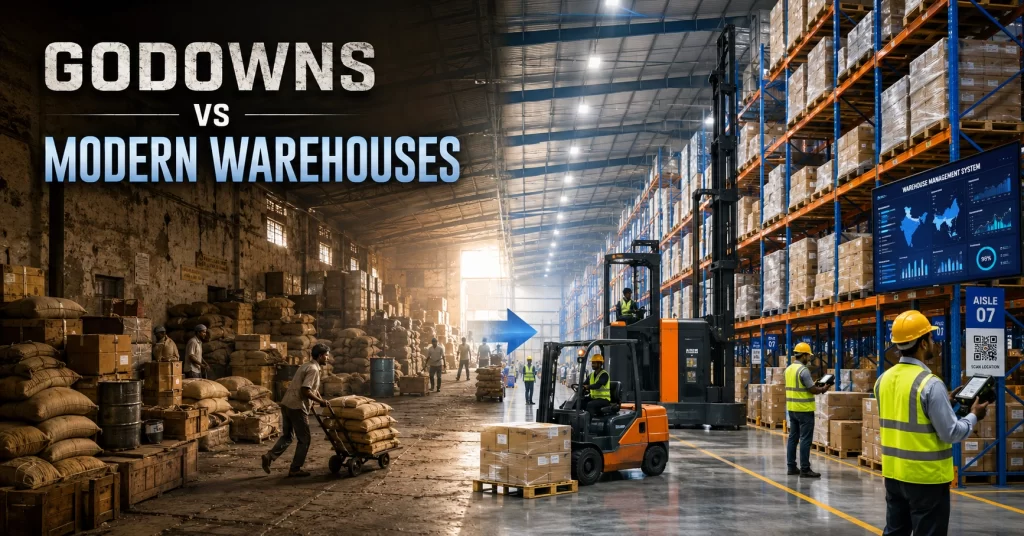
Godowns vs Modern Warehouses is a comparison that tells the story of India’s entire supply chain transformation. Just two decades ago, most businesses stored goods in traditional godowns – dimly lit, poorly organized, and largely manual. Today, the same businesses are shifting to modern warehouses equipped with structured racking, automation, and real-time inventory tracking. This shift didn’t happen overnight. It reflects changing consumer expectations, e-commerce growth, and the need for faster, safer, and smarter storage.
In this post, we’ll break down what separates a godown from a modern warehouse, why Indian businesses are making the switch, and how the right warehouse infrastructure can transform operational efficiency.
What Is a Godown?
A godown is a traditional storage structure commonly found across Indian towns and cities, often near markets, ports, or industrial belts. Godowns are typically:
- Built as simple sheds or single-story buildings
- Used for bulk storage without much structural planning
- Managed manually, with minimal or no racking systems
- Reliant on manual labor for loading, unloading, and stock movement
- Vulnerable to pest damage, moisture, and inefficient space usage
Godowns served Indian trade well for decades, especially for agricultural produce, textiles, and small-scale manufacturing. But as businesses scaled and customer expectations around speed and accuracy increased, godowns started showing their limitations.
What Is a Modern Warehouse?
A modern warehouse is a purpose-built facility designed around efficiency, safety, and scalability. Unlike a godown, it’s engineered from the ground up to support high-density storage, fast order fulfilment, and structured inventory management.
Modern warehouses typically feature:
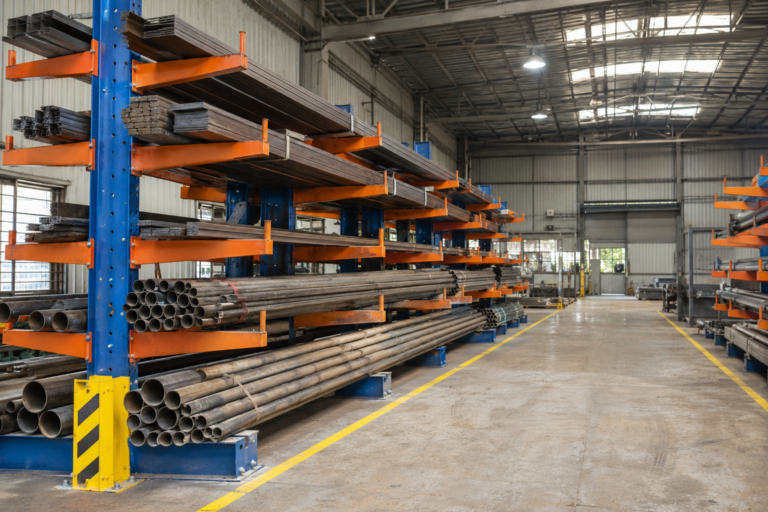
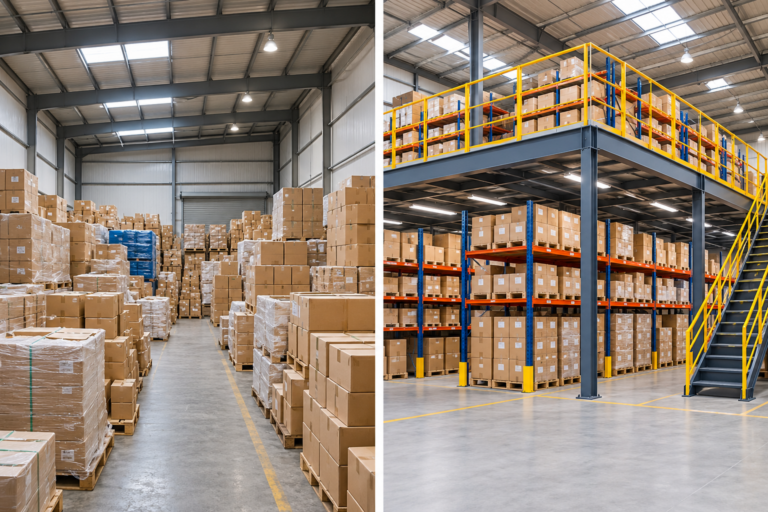
- Engineered pallet racking systems for vertical space utilization
- Mezzanine floors to add usable storage area without expanding the building footprint
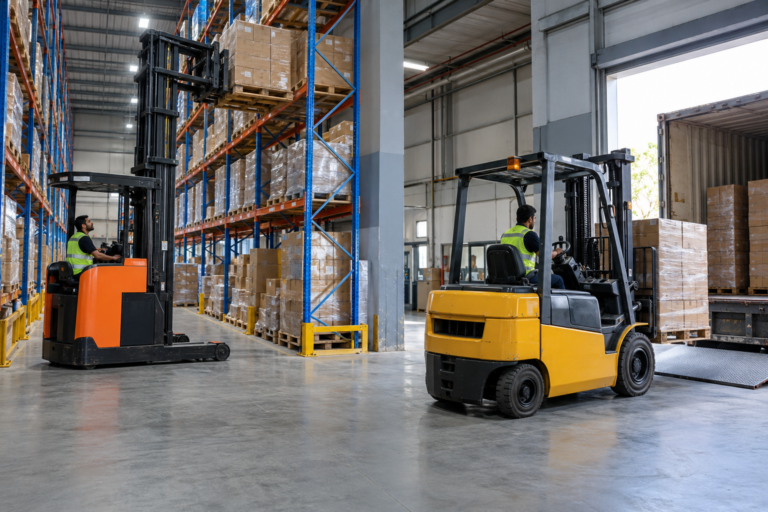
- Material handling equipment such as forklifts, reach trucks, and pallet trucks
- Warehouse management software integrated with physical storage systems
- In some cases, automated storage and retrieval systems (AS/RS) for high-throughput operations
This isn’t just a cosmetic upgrade — it’s a fundamental rethink of how storage infrastructure supports business growth.
Key Differences Between Godowns and Modern Warehouses
The biggest difference lies in how space and inventory are managed. A godown treats storage as a passive activity — goods are stacked and left until needed. A modern warehouse treats storage as an active, optimized system where every square foot and every second of labor counts.
Here’s a direct comparison:
| Parameter | Traditional Godown | Modern Warehouse |
|---|---|---|
| Storage Method | Manual stacking on floor | Engineered pallet racking systems |
| Space Utilization | Low (horizontal only) | High (vertical + horizontal) |
| Inventory Tracking | Manual registers or none | Digital inventory management systems |
| Material Handling | Manual labor | Forklifts, pallet trucks, reach trucks |
| Safety Standards | Minimal | ISO-certified structural safety |
| Scalability | Limited | Modular and easily expandable |
| Order Fulfilment Speed | Slow | Fast, with organized picking zones |
| Building Design | Basic shed structure | Engineered for load capacity and layout |
Benefits of Modern Warehouses
The move from godowns to modern warehouses isn’t just about looking better – it directly impacts the bottom line. Businesses that upgrade typically see measurable gains in storage capacity, safety, and speed of operations.
High-bay racking systems alone can increase pallet storage capacity significantly within the same floor area, since vertical space that once went unused is now fully utilized. Combined with organized layouts, this also reduces pick-and-pack time, which means faster dispatch and fewer fulfilment errors.
Safety is another major factor. Godowns often lack structural load ratings or safety features, increasing the risk of accidents. Modern warehouses use certified racking with load-bearing ratings, column protectors, and safety locking pins – reducing workplace incidents considerably.
Why Indian Businesses Are Upgrading
Several forces are pushing Indian businesses away from godowns and toward modern warehouse infrastructure.
E-commerce and quick-commerce growth have raised customer expectations around delivery speed, forcing 3PL and logistics companies to adopt faster, more organized storage. Manufacturing sectors — including pharma, FMCG, and automotive — now require compliant, traceable storage systems, especially where hygiene and safety regulations apply. Rising real estate costs in cities like Mumbai, Pune, and Bengaluru also make vertical storage far more economical than expanding a facility’s footprint.
Add to this the growing preference among global brands for warehouse infrastructure that meets international safety and quality standards, and the shift becomes less of a choice and more of a necessity.
Role of Warehouse Racking and Storage Systems
At the heart of every modern warehouse is its racking system. Whether it’s selective pallet racking, drive-in racking, or automated radio shuttle systems, the right racking configuration determines how efficiently a warehouse operates.
Well-designed industrial storage systems don’t just hold inventory – they shape the entire workflow, from receiving to dispatch. Poorly planned racking leads to wasted space, slow picking, and safety hazards. Properly engineered racking, on the other hand, supports faster inventory management, better space utilization, and long-term scalability as business volumes grow.
This is why warehouse infrastructure planning should never be an afterthought. It’s a strategic investment that directly affects operational costs and customer satisfaction.
How Reliable Storage Systems Helps Businesses
At Reliable Storage Systems, we help Indian businesses make this exact transition – from unorganized godown storage to fully engineered, modern warehouse infrastructure.
With over 30 years of experience, we design and manufacture a full range of solutions, including selective pallet racking, mezzanine floors, and automated storage and retrieval systems – tailored to your space, load requirements, and operational needs. Our end-to-end process covers site survey, structural engineering, in-house manufacturing under ISO 9001:2015 and ISO 14001:2015 certification, and complete installation support.
Whether you’re running a small godown that needs a complete overhaul or planning a large-scale warehouse from scratch, our team handles every phase – so you get a storage system built for how your business actually operates.
Final Thought
The shift from godowns to modern warehouses reflects how far India’s storage infrastructure has come – and how much further it can go with the right partner. Businesses that invest in engineered racking, automation, and structured layouts aren’t just storing goods more efficiently; they’re building a foundation for faster growth and better customer experience.
If your business is still relying on a traditional godown setup, now is the time to explore what a modern warehouse can do for you. Contact Reliable Storage Systems for a free site consultation and discover the right storage solution for your operations.